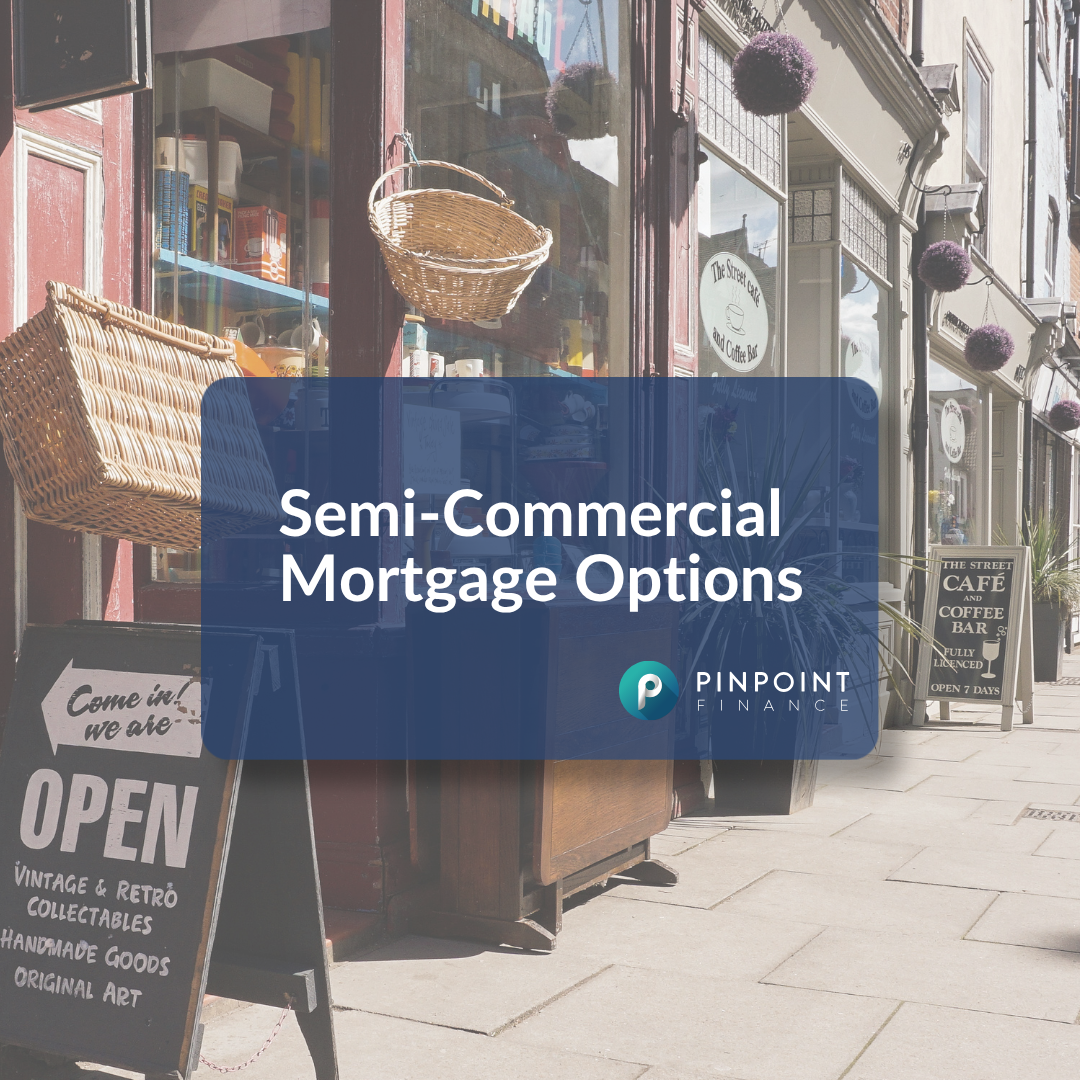
If you have ever walked past a shop with a flat above it in York city centre and wondered how the owner financed the whole building, the answer is usually a semi-commercial mortgage. It is one of the most useful, and most misunderstood, products in the property finance world. Many property investors default to a standard buy-to-let mortgage or a pure commercial loan, without realising there is a product designed for buildings that combine both uses.
This guide explains what a semi-commercial mortgage is, why it matters for investors and small business owners in Yorkshire, and how to approach lenders in the current 2026 market.
1. What Is a Semi-Commercial Mortgage?
A semi-commercial mortgage, sometimes called a mixed-use property mortgage, is a loan secured against a property that has both a commercial element and a residential element. The classic example is a shop with a flat above, but the category also covers pubs with living accommodation, offices with a residential annexe, or a parade of shops with flats on the upper floors.
Because the property serves two purposes, it does not fit neatly into either residential mortgage rules or standard commercial lending criteria. Lenders assess these deals using a blended approach, often looking at the proportion of the building that is commercial versus residential, and pricing the loan somewhere between a buy-to-let rate and a commercial term loan.
2. Why Investors Overlook This Option
Semi-commercial finance gets overlooked for a simple reason: it sits in a gap between two more familiar products. Investors researching buy-to-let mortgages often assume mixed-use buildings are out of scope. Those researching commercial mortgages sometimes assume the residential element complicates things too much to bother with. In reality, a well-structured semi-commercial mortgage can offer better value than either alternative, particularly when the residential portion is a meaningful share of the building’s value.
In York and across Yorkshire more broadly, mixed-use buildings are common on high streets, in market towns, and in converted period properties. That means there is a genuine opportunity for investors who understand this niche, while competitors overlook it entirely.
3. Who This Product Suits
Semi-commercial mortgages tend to suit three types of borrower:
Property investors building a portfolio who want the rental diversity of having both a commercial tenant and a residential tenant under one roof, spreading risk across two income streams.
Small business owners who want to buy the premises they trade from and let out, or occupy, the flat above, rather than paying rent to a landlord for the shop only.
Owner-occupiers with a side income, such as a business owner who lives above their shop and wants a mortgage that reflects both aspects of the arrangement rather than forcing the deal into a purely commercial box.
If you run a business in York and are considering buying the freehold of your trading premises, this is very likely the product you need rather than a standard commercial term loan.
4. How Lenders Assess Semi-Commercial Deals
Lenders will typically look at:
- The split between commercial and residential floor area or value
- The rental income achievable from each element
- The tenant’s business type and lease terms for the commercial portion
- Your experience as a landlord or business owner
- The location and condition of the property
For mixed-use property mortgage applications in Yorkshire, location matters. A shop with a flat above on a busy York high street with good footfall will typically be viewed more favourably than a similar building in a less established location, because rental demand and resale liquidity are stronger.
Deposit requirements are usually higher than for a standard residential mortgage, often starting around 25% of the property value, though this varies significantly by lender and by the specific mix of uses.
5. Mixed-Use Investment Strategy: Getting the Numbers Right
For investors treating this as a mixed-use investment, the appeal is diversification within a single asset. If the commercial tenant leaves, you still have residential rental income, and vice versa. This can make the overall investment more resilient than a single-use commercial property, particularly in uncertain trading conditions.
However, it also means you need to underwrite both elements separately. Work out the commercial rent based on comparable local lettings, and the residential rent based on local assured shorthold tenancy rates. Combine both figures to calculate the overall rental yield, then compare that to the total purchase price and expected mortgage costs.
6. The 2026 Market Context
Heading through 2026, lenders in this space remain selective but active. Base rate movements over the past year have kept commercial borrowing costs elevated compared to the pre-2022 era, and lenders are paying close attention to affordability stress testing, particularly on the commercial element where rent cover ratios are scrutinised closely.
That said, appetite for semi-commercial property finance in York and other Yorkshire towns has held up well, partly because these buildings are seen as lower risk than pure commercial units. A vacant shop unit produces no income at all, whereas a mixed-use building with a let flat above still generates some cash flow even if the commercial space is temporarily empty.
7. Working With a Broker
Because semi-commercial mortgages sit outside the standard product ranges most high street banks advertise, working with a broker who regularly places this type of lending can make a significant difference. At Pinpoint Finance, we work with a panel of lenders who understand mixed-use property mortgage applications across Yorkshire, and we help structure the application so the commercial and residential elements are presented clearly to underwriters.
If you are exploring options, our semi-commercial mortgages page outlines the criteria in more detail, and our team can talk through a specific property with you before you commit to an offer.
FAQ
Is a semi-commercial mortgage the same as a commercial mortgage?
No. A commercial mortgage is used for wholly commercial property. A semi-commercial mortgage is specifically for buildings with both commercial and residential elements, such as a shop with a flat above.
Can I get a semi-commercial mortgage for a property in York or elsewhere in Yorkshire?
Yes. Mixed-use buildings are common across York and Yorkshire, and there is established lender appetite for these deals in the region, particularly in busy town and city centre locations.
How much deposit do I need?
Deposits typically start around 25%, though the exact figure depends on the lender, the split between commercial and residential use, and the strength of the rental income.
Can I live in the flat myself while renting out the shop?
Yes, this is a common arrangement, though it may affect which lenders are suitable, since some products are designed purely for investment purposes rather than owner occupation.
How long does the application process take?
Semi-commercial applications generally take longer than standard residential mortgages because underwriters need to assess both elements of the property. Having accurate rental figures and lease details ready from the outset speeds things up considerably.
Semi-commercial mortgages remain an underused route into a genuinely resilient corner of the property market. Whether you are a business owner in York looking to buy your trading premises or an investor building a mixed-use portfolio across Yorkshire, it is worth understanding how this product works before ruling it out.
Ready to Talk to a Real York Mortgage Broker?
Whatever you’re planning, we’re here to help you make the right call. Talk to a York-based mortgage broker who knows the local market and has access to the whole of the UK lender panel.
Contact Us | Book a Callback | Call us on 01904 866 100
YOUR PROPERTY MAY BE REPOSSESSED IF YOU DO NOT KEEP UP REPAYMENTS ON YOUR MORTGAGE SECURE ON IT. Pinpoint Commercial Finance Ltd is authorised and regulated by the Financial Conduct Authority (FCA reference 733225). Not all products and services we offer are regulated by the FCA.